
When a user opens a website, the judgment starts almost instantly. Before reading a word, people sense whether the site feels reliable or messy. This reaction is not planned. It happens automatically. Design plays a big role in this first feeling. A clean interface feels calm and sorted. A cluttered one feels noisy and confusing. Most users won’t explain it, but they feel it clearly.
In India, where mobile browsing is part of daily life, users expect speed and clarity. Crowded layouts and visual overload push people away fast. This article explains how clean UI vs cluttered UI affects trust, behavior, and decisions. The focus stays practical, based on how real users think and act online.
What Users Notice in the First Seconds
Users scan before they read. Eyes move to spacing, layout balance, colors, and text size. A clean UI design feels easy and stable. Content looks organised. Navigation feels obvious. Users feel relaxed, like okay this looks fine.
A cluttered website design creates the opposite reaction. Too many elements compete for attention. Popups, banners, and colors fight each other. Users feel rushed and unsure. That first impression decides if they stay or leave.
Clean UI Meaning in Simple Words
Clean UI means showing only what matters. Clear headings. Proper spacing. Readable text. Buttons that look clickable without guessing. It’s not about fancy visuals or trends. It’s about comfort.
A clean UI helps users move naturally through a page. They don’t think hard. They don’t feel lost. Everything feels placed with intention. Simple, effective, and user-friendly.
Why Some Websites Feel Cluttered
Clutter happens when everything wants attention at the same time. Multiple CTAs. Bright colors everywhere. Too many fonts. Long paragraphs with no breaks. Users feel overloaded.
A cluttered UI can hide good content. Even useful information feels tiring to read. Users skim, miss key points, and leave early. Trust slowly drops, even if the business is genuine.
How UI Design Builds User Trust
Trust forms quietly. A clean UI vs cluttered UI comparison almost always favors simplicity. Clean layouts signal effort and care. Users assume the brand behind it is reliable.
Messy layouts raise doubts. If the site feels careless, users question safety and quality. They may not say it, but the feeling stays. Design speaks before content ever gets a chance.
Clean UI Impact on User Behavior
With clean UI design, users scroll more and stay longer. They understand where to click. They feel confident while exploring. Attention stays focused.
Cluttered layouts break that flow. Users jump between sections, miss information, or exit fast. Engagement drops. Behavior data often confirms what users already feel.
Why Cluttered UI Increases Bounce Rate

Crowded pages force the brain to work harder. Too many choices create stress. Users hesitate. Then they leave. It’s that simple.
A cluttered website design slows decisions. Users feel unsure about next steps. Bounce rates rise without warning. Most exits happen quietly, without feedback.
Mobile Users React Strongly to UI
Mobile screens need clarity. Space is limited. Fingers are big. A clean UI feels readable and easy to tap. Buttons behave well. Text flows nicely.
Clutter on mobile feels harsh. Tiny text. Overlapping elements. Popups blocking content. Indian users browse mostly on phones, so mobile UI quality matters a lot.
Indian User Expectations From UI
Indian users value speed and clarity. Slow pages plus clutter cause instant exits. Familiar layouts feel safer. Clear language helps build comfort.
Website UI design India works best when it respects user time. Flashy designs don’t always impress. Simple layouts often perform better, honestly speaking.
Clean UI and Conversion Confidence
Conversions happen when users feel sure. Clean forms. Clear labels. One main action per screen. A clean UI reduces hesitation.
Too many fields or distractions raise doubts. Users pause and rethink. Drop-offs increase. Clean design builds confidence during signups, payments, and contact actions.
Choosing the Right UI for Websites
Choose clarity over noise. Focus on one goal per page. Remove elements that don’t support it. Test on mobile first. Ask real users for feedback.
Clean doesn’t mean empty. It means intentional. When unsure, simplify. Users usually reward clarity with trust and longer visits.
Also Read: Why clean UI matters for modern websites today
Clean UI vs Cluttered UI Comparison
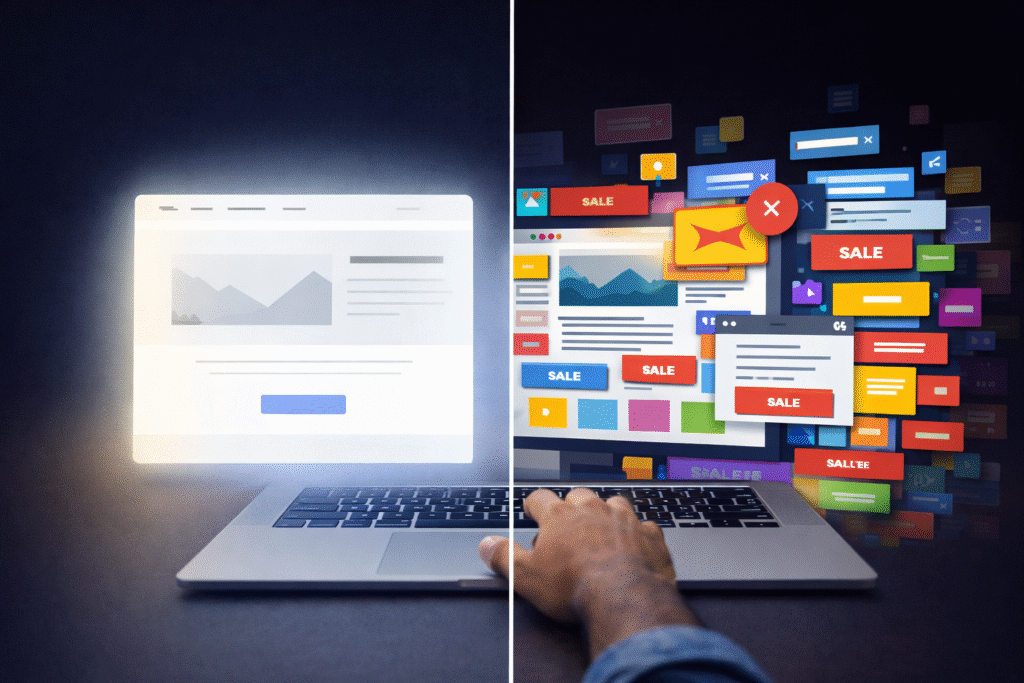
| Factor | Clean UI | Cluttered UI |
|---|---|---|
| User trust | Higher | Lower |
| Mobile usability | Smooth | Frustrating |
| Bounce rate | Lower | Higher |
| Conversion chance | Stronger | Weaker |
| Visual comfort | Calm | Overwhelming |
Conclusion
When it comes to clean UI vs cluttered UI, trust follows clarity. Clean design makes users feel safe and guided. Cluttered design makes them rush and doubt. The difference shows in engagement, behavior, and conversions over time.
For Indian audiences, where mobile usage dominates, clean UI is no longer optional. It sends a clear signal of quality and care. You don’t need loud visuals or heavy elements. You need structure, space, and focus. Users notice, even if they never say it out loud.